
@XWaysGuide For some reason I keep thinking of this … http://t.co/Ti7vrpdWbV—
(@Cheeky4n6Monkey) July 31, 2013
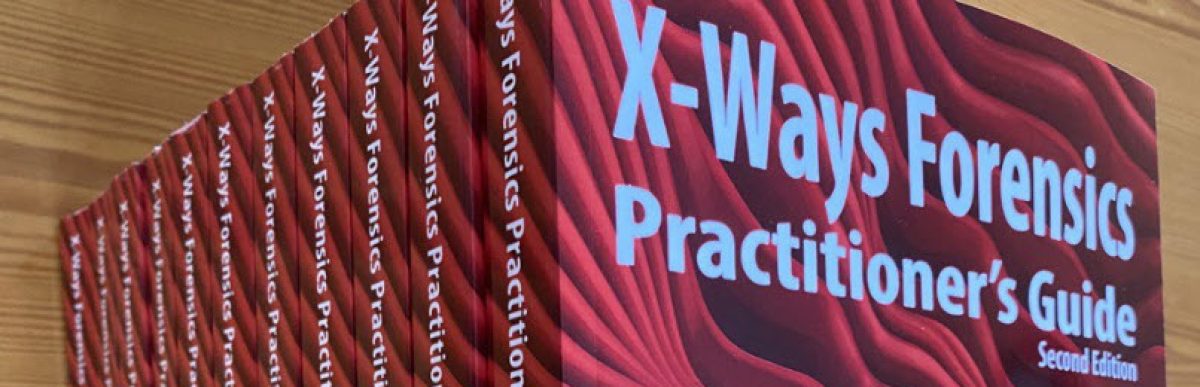
@XWaysGuide For some reason I keep thinking of this … http://t.co/Ti7vrpdWbV—
(@Cheeky4n6Monkey) July 31, 2013
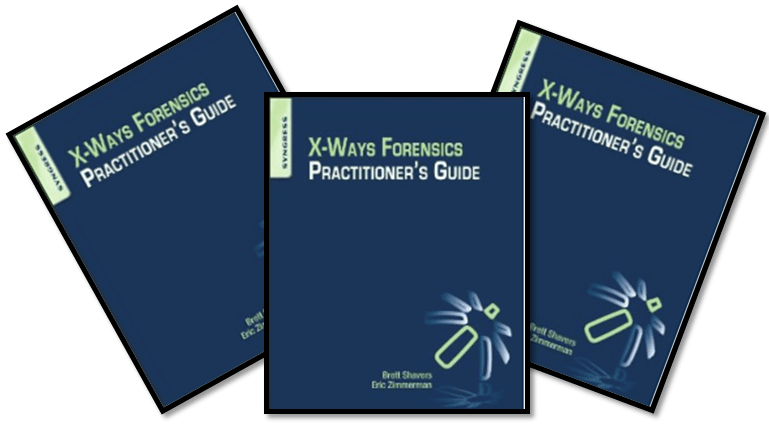
One of the benefits of this book is that it shows you how to use X-Ways in your cases, by practically showing which buttons to push to get what you need quickly,
The other aspects of the book show how X-Ways works. We show you how you can tweak it do exactly what you want and only what you want at the fastest speed possible.
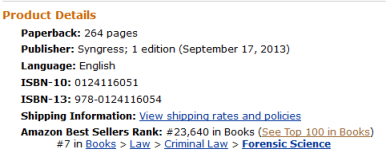
To everyone who pre-ordered, you helped place the X-Ways Guide at the #7 spot of best sellers on Amazon (under Books > Law > Criminal Law > Forensic Science).
Hacking Exposed recently interviewed Eric in which he spoke a bit on the XWF Guide and his career. Eric’s experience in forensics shows in the book, which if you haven’t heard, should be available on August 2nd.
To make sure you can get a copy without waiting, consider a pre-order at Amazon 🙂

X-Ways Forensics is surely taking off as a strong primary tool. There have been more than a few government and private forensic labs in the world not upgrading their “other” tool in order to migrate to XWF. This book more than satisfies how to do just that.
Sometimes, a date change is a bad thing. But this time, it’s a good thing.

Looks like we are way ahead of schedule going to print. With the publisher’s efforts (Syngress) combined with the speed of testing, writing, and editing talents of Eric Zimmerman, Jimmy Weg, and Stefan Fleischmann, we have pushed the print date from February 2014 up to August 2, 2013. Now that has to make someone happy.
Levity in the digital forensics software world…(I didn’t make the video, and i don’t take the video as a slight against Encase, it’s just a funny video).
Just released version 0.5.4 of XWFIM.
Changelog:
Change: Renamed Settings.bin to xwfim.bin since people seemed to run both XWFIM and XWFRT from same directory and this caused problems
Change: Updated book cover image and URL when clicking on the book image
Change: Delete any old viewer directories before unzipping a new version to avoid file inconsistencies across viewer versions
If you get a crash about “key not found” or similar, delete settings.bin and restart. Prior to this release, both XWFIM and XWFRT used the same file, settings.bin, to store configuration data. If you can both programs from the same directory this would cause issues.
This update will download automatically once you start XWFIM. Click the lower right corner of the application for details.
“This book is going to be great! The essential, accessible answer to the impenetrable density of XWF’s help file”. – Craig Ball
There’s been more than few tweets about having to wait until October, but don’t worry, we are ahead of that schedule. The most current target date for printing is September 3.

The book is now in the hands of trusted reviewers and so far, the comments have been really positive. So much so, that even those who have used XWF for years learned tips and tricks from even the first chapters of the book.
There are a number of XWF users who started from the first versions of XWF and even went to the first XWF courses (back in ’05…). For these XWF users, the learning curve was short. New tool, new training by the developer, no problem. For everyone else purchasing a dongle and trying to maneuver around a program that doesn’t look like any other they use is a different story. I’m sure ‘different’ could be replaced with ‘frustrating’.
But with this book, new and not-so-new XWF users will have everything needed to use XWF as their primary tool (or even as the secondary tool that always works when the others fail).
Here are some benefits from the book, maybe you fit in one or more of these.
–Non XWF user: Haven’t tried it, like what I’m using already (even if I complain about it), and don’t have the time to learn a new tool. I don’t even want to learn another tool. However, since there is so much talk about X-Ways, I’ll try it and check it out.
–New to forensics: I haven’t got a clue which tool to start with, but XWF sounds like it works and fits my budget!
–Current XWF user: I have used XWF for years and think I got it down. Then again, I still don’t use it as a primary tool and wonder how anyone does that. I can use some tips on how XWF does more because I’m not totally confident in using XWF.
–Forensics instructor: I spend more time teaching the tool than forensics. A student guide would save time in the class better spent teaching forensics instead of software use.
–Expert forensics analyst: I want the most indepth, powerful, fastest, and configurable forensic tool available!
If you have concern that the book will be outdated soon, don’t worry. The material covers the vast majority of XWF features in detail. Any new item that is added as an update doesn’t change the information in the book, it only adds a new capability. Once you know the tool, the updates that are put out almost monthly are awesome.
As in, the book is done, no more to add, it’s all done. It’s now in the hands of the publisher to proof, print, and distribute. Accuracy checked by Stefan Fleischmann (developer of X-Ways Forensics), Tech Edited by Jimmy Weg (an expert X-Ways user and superb tech editor), and written by Eric Zimmerman (who I have found to be a great writer and even better X-Ways master) and myself, this is the book to have. Refresh what you learned in an X-Ways course or learn by reading. Having used X-Ways since the first release, this is a book I whole-hardheartedly recommend.
Order the guide now by clicking the book image.
We made a change with the case studies in the book, which some may not like…we didn’t do the case studies chapter.
Actually, we spent a lot of time trying to write up case studies, only to find that we were spending more effort and writing on the “how to do forensics’ rather than the ‘how to use XWF’. As an example, writing about malware analysis with XWF requires a book by itself.
However, we have managed to provide case flow examples with electronic discovery, consent searches/triage, live response, and a myriad of specific examples of how to use XWF in different situations that can be put to use in just about any type of case. This is on top of going through XWF with a fine tooth comb explaining every nook and cranny to either use XWF with speed and minimal user intervention (as close to a one button approach possible) through the most granular configuration as you want to have in a forensic application.
The layout and organization is simple, to the point, and the information is easy to find (index, appendix, and lots of screenshots). It will be a required reference book on your desk if you are a user of X-Ways Forensics, whether you started using XWF from its first release or if your first XWF dongle just arrived yesterday. For anyone that teaches forensics using XWF, you may want to consider this book as required reading for your students to save you a lot of class time teaching ‘how to use XWF’ in class in order to focus on teaching forensics.
All chapters are done, the writing is over, and the XWF Guide is just a few steps away from being put on paper (proofing, setting, and printing is all that is left).
Having re-read the book, it is something I would have liked to have had when starting to use X-Ways Forensics in the beginning and while using it on cases.
 The X-Ways Forensics Practitioner's Guide/2E